Details That Make Handmade Cards Feel Special
There’s a point in nearly every card project where things stop looking right and you can’t quite say why. The cardstock was fine in the store. The sentiment stamped clean the first try. And somewhere on the desk, under a pile of envelopes that have been there since the last project, there are scissors that went missing twenty minutes ago and will probably turn up again in that same pile tomorrow.
I could be compensated, if you click on a link in this post via a cash payment, gift or something else of value for writing this post. See our full disclosure policy and privacy policy for more details.
But the card itself looks unfinished, and it’s hard to explain what’s missing.
Take a card made a few months back, a birthday card for a friend who mentioned liking sunflowers once, in passing, months earlier. The cardstock was a soft yellow that looked warmer in the package than it did once it was actually cut. The sentiment was stamped and re-stamped twice because the ink pooled weird the first time. Then there was a good twenty minutes spent deciding whether one sunflower die cut looked lonely in the corner or whether three looked cluttered, before landing on two, slightly overlapping, which is obvious in hindsight but did not feel obvious at the time.
That’s usually where a die cut earns its place. A small shape, whether it is a flower, a leaf, or a tiny frame, tucked into the right spot changes the whole balance of a card that otherwise just sits there.

Where the Little Pieces Come From
A well-rounded collection of die cuts for card making can include everything from stitched shapes and sentiments to holiday motifs and delicate borders. That variety matters more than it sounds like it should, because most people are not sketching intricate florals by hand on a random Tuesday. A die does the cutting so the time goes into deciding what to do with the shape once it exists.
For people who make cards often, these pieces pile up without anyone really deciding to let them. Flowers get sorted into a tray that used to hold something else. Labels get shoved into a drawer next to the ribbon. A stash builds up slowly enough that nobody notices until there’s suddenly enough on hand to build half a card without opening a single package.
The sunflower card, as it turned out, used a leftover leaf die from an entirely different project, a wedding card from the spring, if the memory is right, or possibly a baby shower, one of those two. Green is green and nobody was going to notice or care.
Buying a die and actually reaching for it are different things though. A new set shows up, sits next to the paper trimmer with every intention of getting used immediately, then gets reorganized into a binder. Three weeks later, it becomes the one thing used for six cards in a row for no better reason than it was already sitting out.
Beyond the Flowers
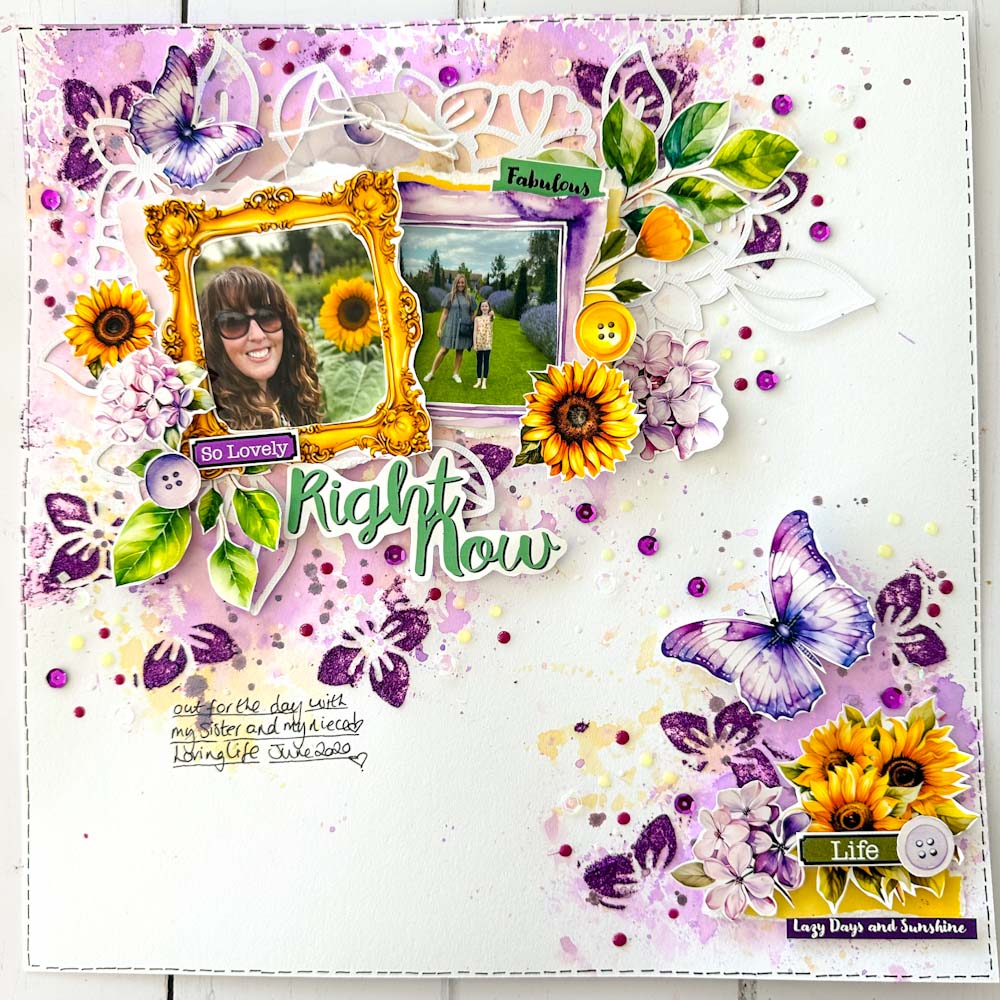
Florals tend to be the default because they work for almost anything. Birthdays, thank-you notes, sympathy cards, and Mother’s Day projects can all be built around similar collections of flowers and leaves. The colors shift and the sentiment moves, but the underlying shapes barely change.
Holiday dies run on their own calendar instead. Snowflakes appear in November, hearts show up once the tree comes down, and pumpkins and wreaths return on a schedule that somehow feels both predictable and never quite planned for.
Texture has become harder to ignore lately too. Layered frames and raised embellishments show up constantly online, though flat cards still have the obvious advantage of surviving an actual trip through the mail without the layers shifting or catching on something in transit.
Pinterest gets some of the blame here. Boards full of elaborate paper flowers, photographed next to coffee cups that were clearly never within ten feet of the actual craft mess, get saved with every intention of being recreated someday.
Of course the real process looks nothing like that.
A paper pad that looked perfect under the bright lights of the craft store can be a completely different story once it gets home. The colors do not always play nicely with the rest of the supplies, and the pattern that seemed like the obvious choice suddenly feels wrong. Then the adhesive disappears halfway through the project, because apparently it only runs out when it is actually needed. Usually, the original idea gets adjusted somewhere along the way anyway, and the finished card ends up being something that was not really planned from the start.
That is probably why so many card makers end up cutting extras whenever the die-cutting machine is already out. A few spare leaves or labels get tucked into a drawer for later, usually with no specific project in mind. Then somehow those small leftovers start becoming useful. Someone goes looking for foam tape and comes back with enough pieces to nearly finish another card, assembled entirely from things that were never supposed to become a project in the first place.

The Storage Problem Nobody Solves
Storage is usually where the good intentions start to fall apart.
The system that felt completely manageable in January has a way of looking much less impressive by summer. Dies that were carefully arranged by theme get moved around when a project needs something quickly. Sentiments disappear into the wrong pocket and eventually turn up stuck to the back of a completely unrelated set, usually after they have already been replaced.
There are people who keep everything separated by season, people who sort flowers from backgrounds and sentiments, and people who started with a very detailed plan before quietly switching to a few larger categories that are easier to maintain. Magnetic sheets help because at least the designs stay visible, even if the organization system slowly becomes “birthday,” “holiday,” and “I know I have this somewhere.”
Eventually, most crafters find a system that works well enough. Not perfect, not something worthy of a storage makeover video, but functional. The goal is not to have every die arranged like a craft store display. It is simply to know where to look when a project needs one more detail.
And that is usually when the forgotten pieces earn their spot. A frame that seemed unnecessary months ago suddenly works with a new sentiment. A leaf tucked away from an earlier project fills the empty space on a card that was almost finished. The supplies that were hardest to organize are often the ones that make the next idea come together.

Why the Cards Still Matter
Most communication now shows up as a text or a notification and disappears within a day or two. An envelope with something handmade inside still lands differently.
The recipient of that sunflower card will never know the sentiment was stamped twice or that the leaf die came from a leftover wedding project. They won’t know how long it took to decide whether two flowers looked better than one. They’ll just notice that someone spent actual time on it.
The cards that get kept are usually not the ones that turned out exactly as planned. They are the ones where something had to be adjusted along the way, where a layer moved around until it finally looked right or a sentiment ended up somewhere different than originally intended. Those little decisions are what make a handmade card feel personal, because they are part of the story of how it came together.
Long after the actual occasion is forgotten, nobody can quite bring themselves to throw them out.
And somewhere nearby, mixed in with cardstock scraps and supplies that were definitely going to be organized last weekend, there is probably a growing collection of dies waiting for the next project to come together.