
How Do Restickable Photo Tiles Let You Decorate Your Walls Without Nails?
The Problem With Permanent Wall Décor
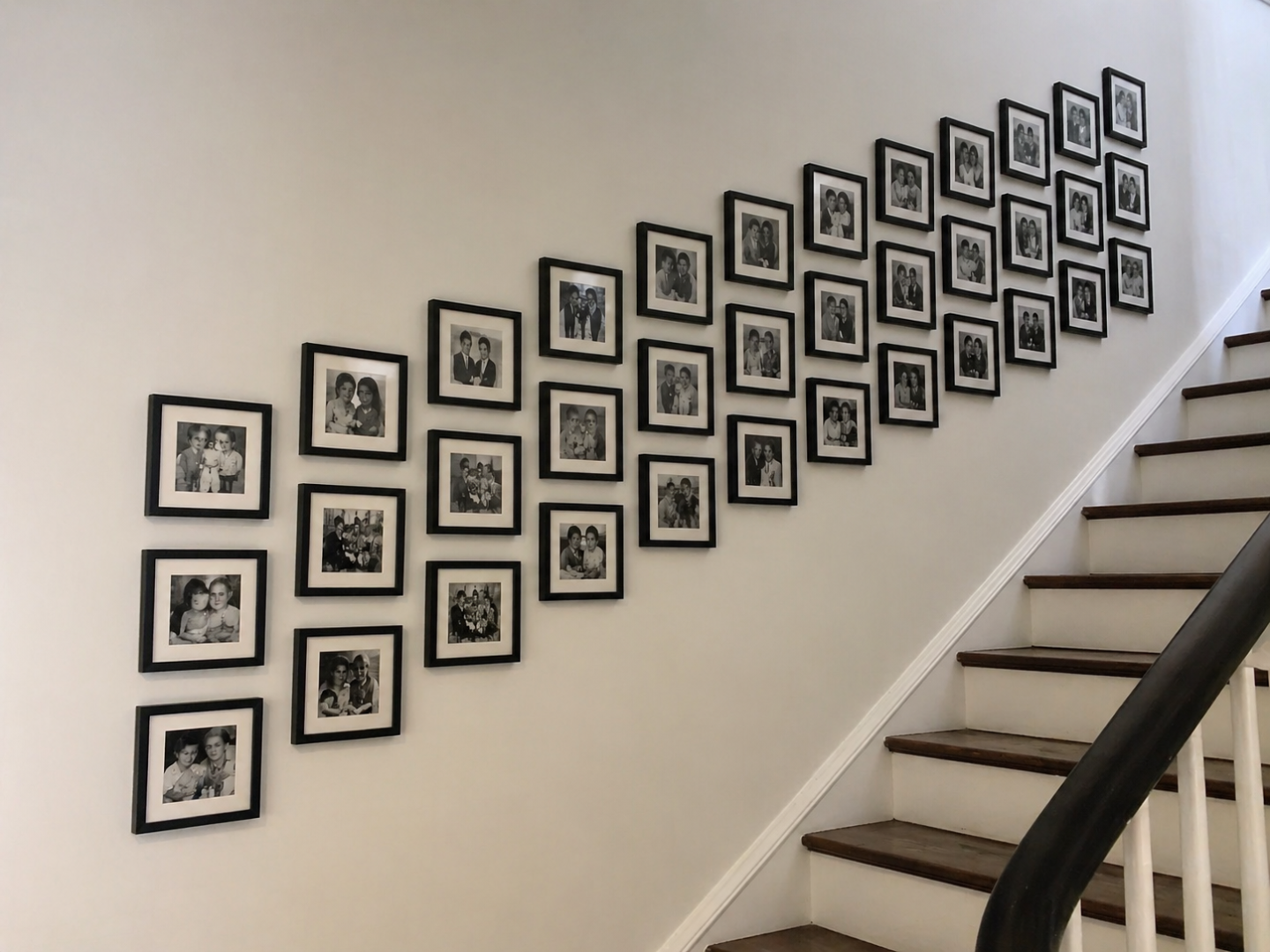
For renters, frequent movers, and homeowners who’d rather not commit to a fixed arrangement, personalising a wall can feel like a risky proposition. Every nail hole left behind risks security deposit deductions, repainting headaches, and wasted weekends. That frustration has fueled the rise of adhesive-based decoration systems, among them photo tiles , lightweight, pre-framed photographic prints engineered with repositionable adhesive backing that allows installation, adjustment, and removal without ever picking up a tool.
I could be compensated, if you click on a link in this post via a cash payment, gift or something else of value for writing this post. See our full disclosure policy and privacy policy for more details.
The Science of Damage-Free Adhesion
The core of such adhesives is represented by PSA technology. Contrary to the conventional methods of forming bonds, which require a chemical reaction, PSA uses a temporary bond formed as a result of contact and application of pressure. This technology produces sufficient strength to secure light objects, but it will not damage walls and paint upon removal due to a clean peeling process. Recent advances have provided an improved balance between adhesive forces and ability to remove them easily, which double-sided tape and regular glue cannot achieve. Additionally, the condition of the surface is a contributing factor for the adhesive efficiency.
How Restickable Tiles Are Built
Restickable panels usually feature a dense core made of foam (sometimes called gatorboard or foam core). The foam is crucial for making restickable prints, as it has the strength of regular wood but weighs significantly less than its wooden counterpart. The lightness means that the glue won’t have to contend with gravity at any point, regardless of changes in temperature. Additionally, despite the panel being lightweight, there will be no compromise to the quality of the print itself – high-definition ink will either be placed straight on top of the panel or on top of photographic paper.
The adhesive backing usually has a microscopic suction cup or bead structure to prevent it from drying out or cracking while being unpacked during relocation. Since the back is reusable, many suppliers advise saving the protective wax paper layers. If you ever decide to move elsewhere, you just put them back on before moving out and peel them off again upon arrival.
Installing and Arranging Without Tools
Even before you remove any backing at all, it might help to lay out your tiles on the floor so you can see what your “story” will be. This will help you play around with gradients or timelines without any physical labor. On the wall itself, it might help to use either a level or laser line if you’re working with a completely linear gallery. While your tiles can be easily moved, doing it the right way on your first try will save you effort as well as keep the sticky surface ready for future attempts.
It should be noted that the way to adjust tiles is as essential as the installation method itself. Whenever you have to shift a tile somewhere, it is very important not to pull it directly towards yourself, since you might apply too much vacuum pressure to the paint. Instead, you should roll the tile off the wall, carefully lifting its bottom end up.
Surface Compatibility and Weight Limits
In this case, physics of adhesion is based on ‘effective contact area’. A textured wall has its structure made up of hills and valleys. The adhesive will make contact only with the hills, leaving up to 70% less surface available. That is why such tiles are recommended for perfectly smooth and solid walls only. If you happen to have slightly textured wall, then heating it with a hair dryer for about 5 seconds at minimum temperature before putting the tiles down can be of some use, although care is required.
Finally, adhesion needs to resist continuous shear forces. The lightweight design of standard 8×8 inch tile may tempt one to try to ‘improve’ the tiles’ look by placing heavy glass or other frames around them; however, doing that will not do any good since the glue is designed specifically for composite frames provided with such tiles. When you are putting up a nursery room or installing tiles directly on top of your bed, make sure that you are using the size suggested by the manufacturer. Another useful tip is that if the tile appears to be relatively heavier than a deck of cards, then the adhesive is probably nearing its safety limits.
The effects of the environment like ‘outgassing’ and thermal expansion also affect the adhesives. In addition to moisture, the effect of very low temperatures is that the adhesive becomes brittle whereas at very high temperatures the adhesive becomes highly viscous. For better results, you should try to avoid using walls with exposed edges as the large difference in temperature between the warm internal air and the external cold wall causes condensation of moisture behind the tiles, thus leading to the failure of the adhesive.
Practical Tips for Best Results
- Ensure that you clean the surfaces that you intend to stick your tiles on using a lint-free cloth.
- Ensure that at least two weeks have elapsed since the time you painted the wall surface.
- Leave consistent spaces between tiles for an elegant installation.
- Take pictures of your work during installation to be able to reproduce the results.
- Do not use the material in areas like bathrooms and kitchens due to their constant presence of steam.
Common Questions Answered
Quality adhesive systems produce little residue. Gently removing tiles at an angle barely scratches the wall surface, and even the slightest trace left behind can be easily removed using a soft cloth. It should also be noted that the adhesive properties weaken gradually with each attempt to reposition the tile – although restickability is robust, it is not infinite.
A More Flexible Approach to Personal Space
Restickable photo tiles have truly revolutionized the relationship between individuality and permanence. They provide the freedom to express oneself without tools, money, and anxiety over committing mistakes to the walls forever. In doing so, they provide an opportunity for experimentation and change along with the homeowner as he or she matures.