Hawker Streetfood Tour Around Singapore’s Michelin Food Stalls
Singapore’s Chinatown hawker centres pack more food history per square foot than anywhere else in the city. Michelin-starred stalls operate next to third-generation family recipes that never sought fame but earned local worship anyway. The challenge is not finding good food, it is knowing which of the 260 stalls at Chinatown Complex deserve your limited appetite. This guide to Singapore’s Michelin Food Stalls cuts through the chaos with stall names, signature dishes, ideal timing, and the insider knowledge that turns a random hawker visit into a strategic eating mission.
I could be compensated, if you click on a link in this post via a cash payment, gift or something else of value for writing this post. See our full disclosure policy and privacy policy for more details.
Chinatown Hawker Stalls Worth Every Queue at Singapore’s Michelin food stalls
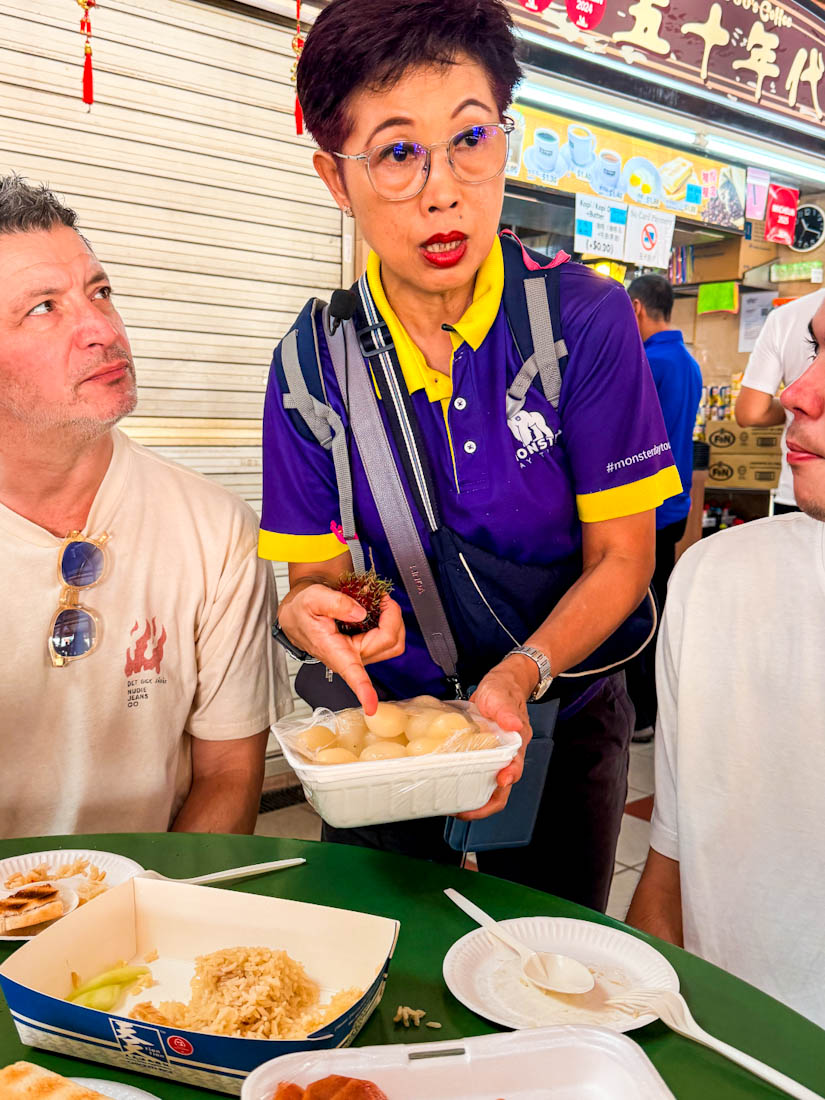
We took a street food tour, which we booked on Viatour, but you can also Get your guide. It really is an easy way to see Singapore and eat the best food. Although these food stalls are open to anyone, they often have very long queues. So doing this by an organised food tour let us try everything with no wait. Someone goes an hour before you arrive at each destination to order your food. We ate so much!!
We had already tried Arab Street and Little India, but this was the icing on the cake.
What are Hawker Centres?
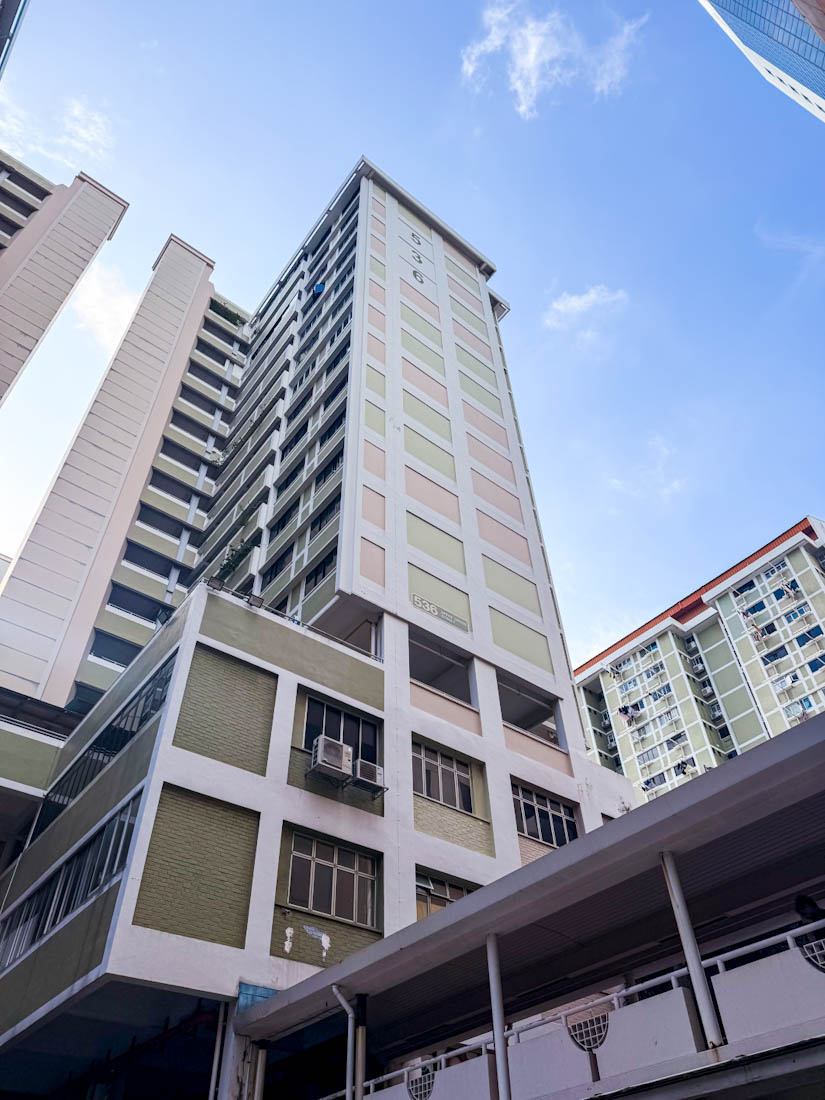
Hawker centres are Singapore’s most democratic food spaces. In the 1970s, street vendors were moved from pushcarts into organised complexes, preserving traditional recipes while improving hygiene. The Chinatown Complexes and Food Centres are built into housing blocks, meaning locals eat there daily. Many sit beneath public housing blocks, where residents simply come downstairs to eat, keeping standards high and prices affordable. Now, some of these food premises are actually Singapore’s Michelin Food Stalls!
Which food centres are there in Singapore’s Chinatown?
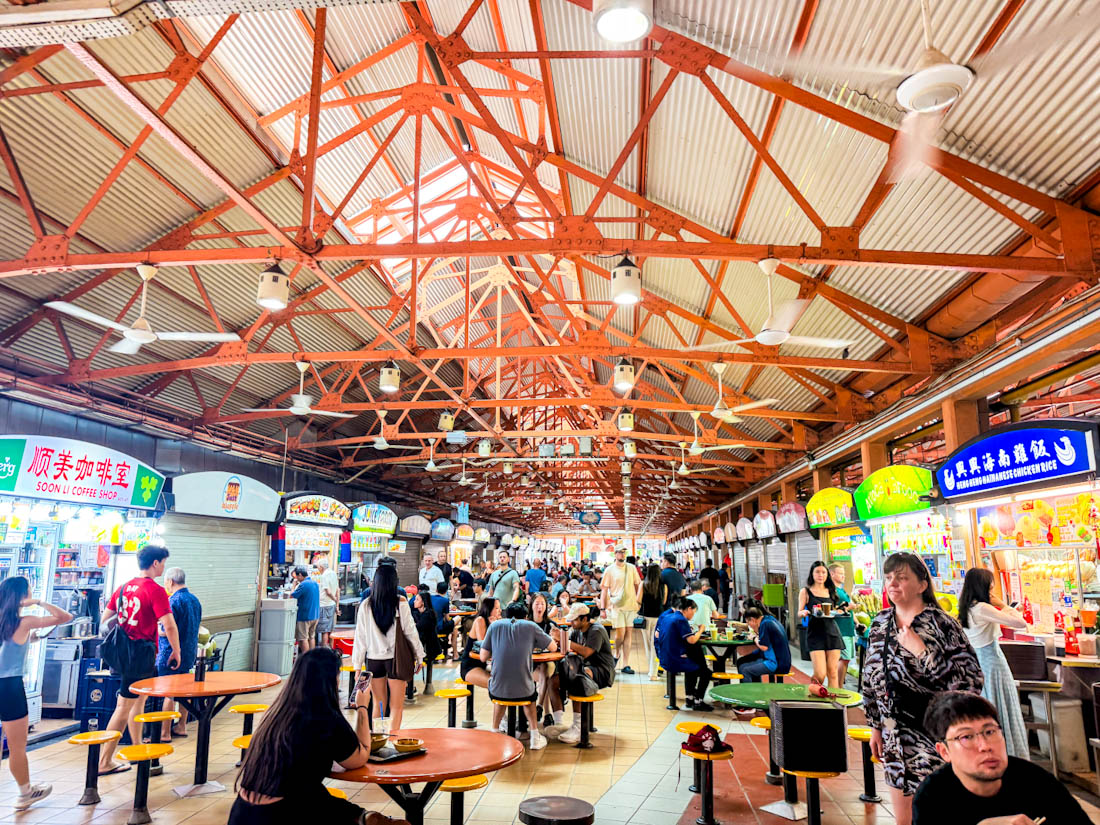
The neighbourhood houses many food centres, restaurants, food streets, and smaller eateries throughout the area. Here are the main food complexes/hawker centres in and immediately around the core Chinatown area:
- Chinatown Complex Market & Food Centre: This is the largest, with over 200-260 stalls.
- Maxwell Food Centre: Located nearby on Kadayanallur St, renowned for dishes like Tian Tian Chicken Rice.
- Chinatown Food Street: An outdoor dining street on Smith Street (though sometimes closed for refurbishment, vendors are nearby).
- People’s Park Food Centre: Located on the other side of Chinatown, known for various local Chinese dishes.
- Hong Lim Market & Food Centre: Located within a few minutes’ walk.
The main, central, and most famous food complex in the heart of Chinatown is the Chinatown Complex Food Centre.
These stalls run on razor-thin margins, often passed down through three generations, with recipes that have not changed since the 1950s. When the Michelin Guide started recognizing street food in 2016, Chinatown stalls dominated the affordable categories, proving what locals already knew. This is our Hawker Streetfood tour around Singapore’s Michelin food stalls.
Hong Lim Complex Tanglin Crispy Curry Puff
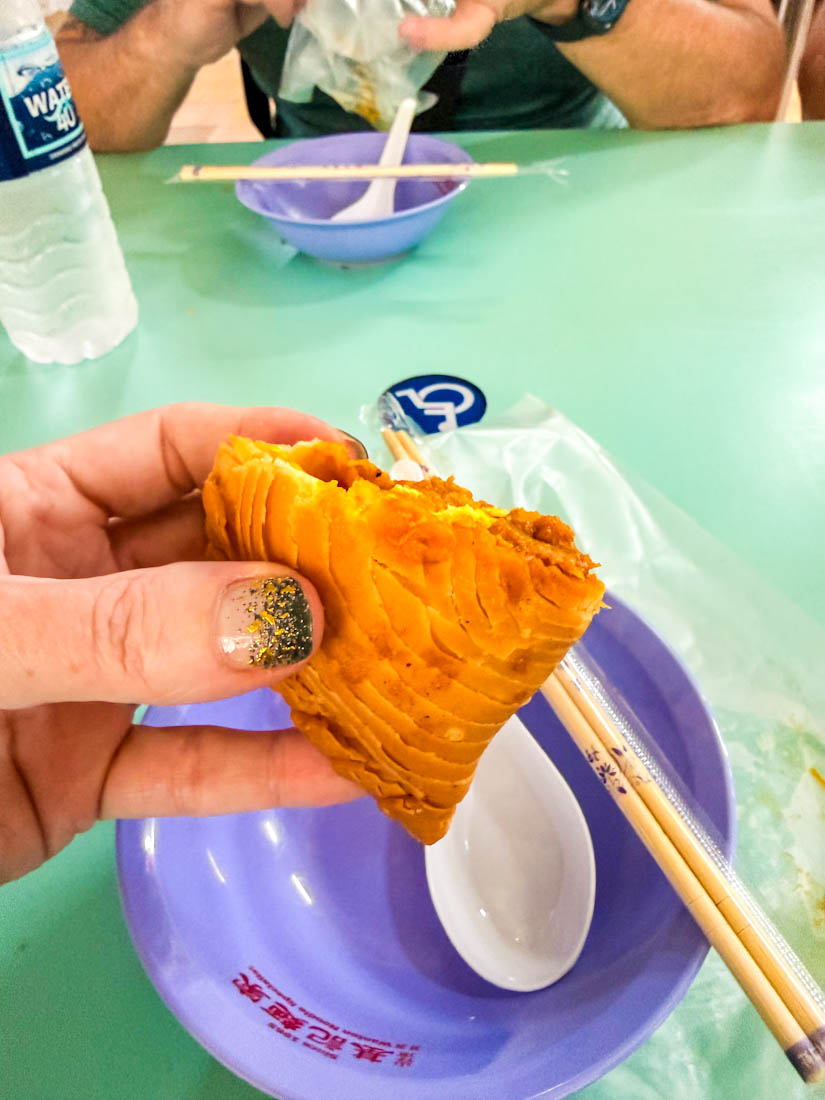
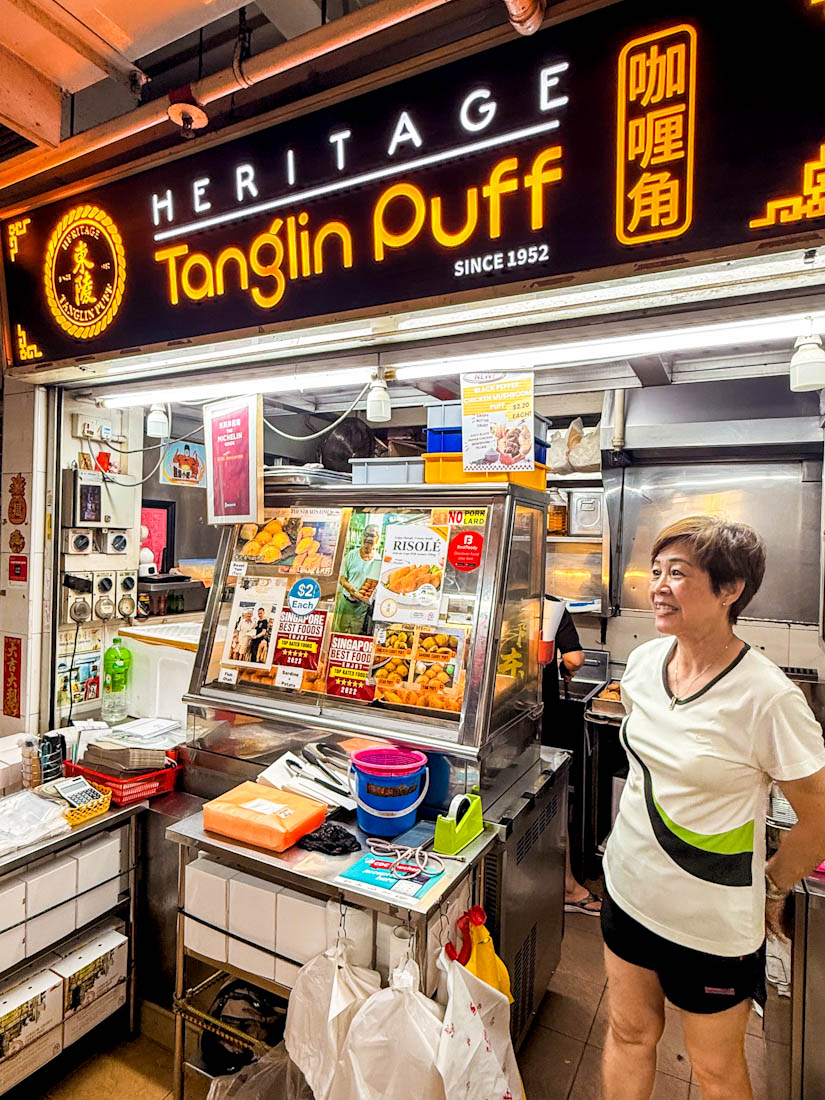
We started at the Hong Lim Complex, which is located at Upper Cross Street near the bustling Chinatown. The main attraction is the market and food centre. The first thing we tried was the Heritage Tanglin Puff. Formerly known as “Tanglin Crispy Curry Puff Since 1952”, the stall has rebranded as “Heritage Tanglin Puff Since 1952”
The stall serves up different types of Crispy Puffs, which include Potato Chicken & Egg, chicken curry, and even a black pepper and chicken mushroom puff. The puff itself is delicious and very crispy yet light and the centre of the curry puff was a delight!
Hong Lim Complex Famous Sungei Road Trishaw Laksa
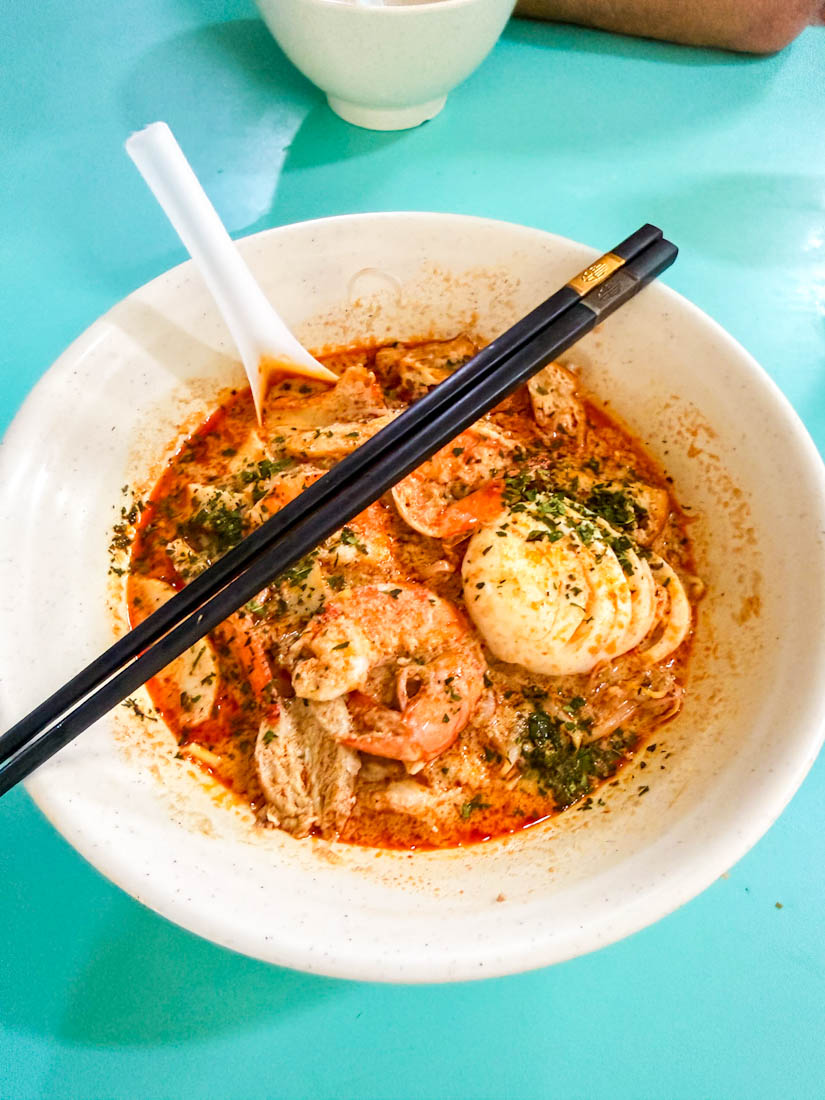
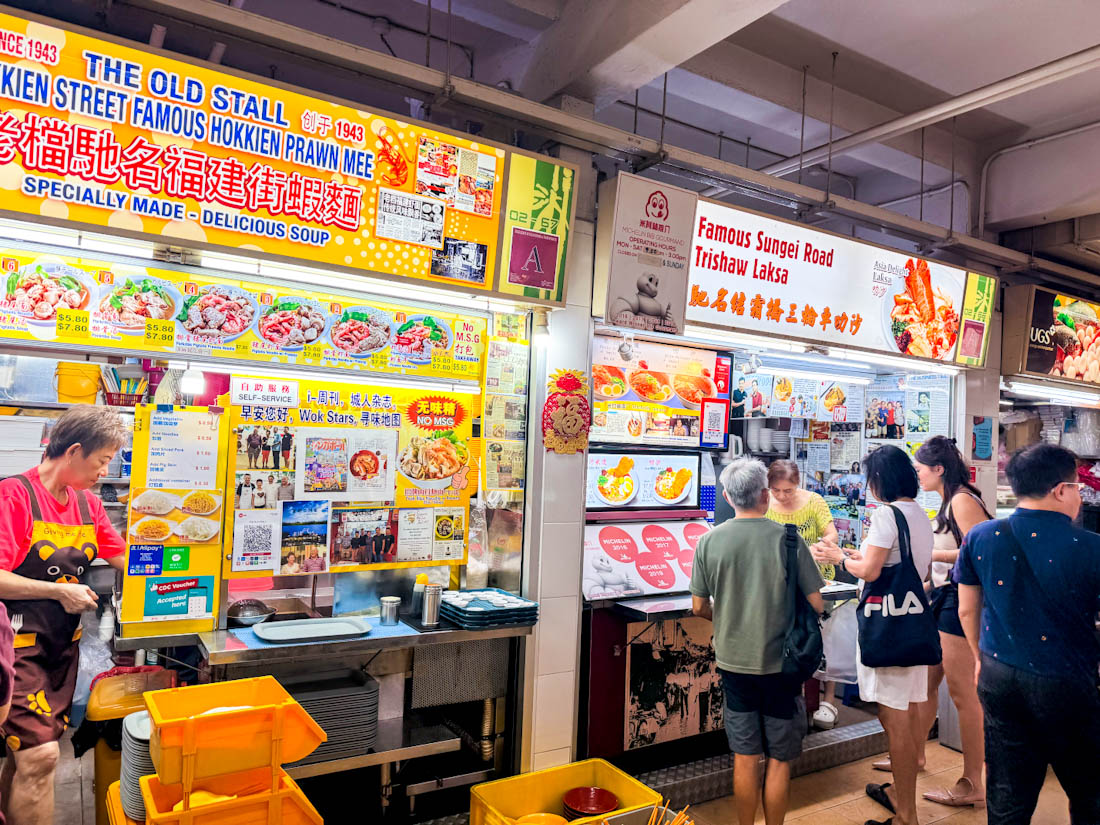
Next up, we tried the laksa at Famous Sungei Road Trishaw Laksa, and yes, the name is quite the mouthful! Chef-owner Daniel Soo, now in his sixties, opened the stall 18 years ago, and it’s become known for its distinctive take on laksa and mee siam, easily their two star dishes.
So what makes it different? For me, it’s the balance and simplicity. My bowl came loaded with prawns, tau pok, bean sprouts and a hard-boiled egg, all sitting in that rich, coconutty broth. It’s comforting but not overly heavy, the kind of dish you keep going back for spoon after spoon.
A little tip from experience: go at 11am and be first in line or book via a food tour.
Being a Michelin Guide Bib Gourmand awardee is no small feat. Established in 1997, the Bib Gourmand recognises eateries serving consistently good food at moderate prices. They’ve earned the Bib Gourmand year after year now.
Ji Ji Noodle House, Michelin Bib Gourmand Wanton Noodles
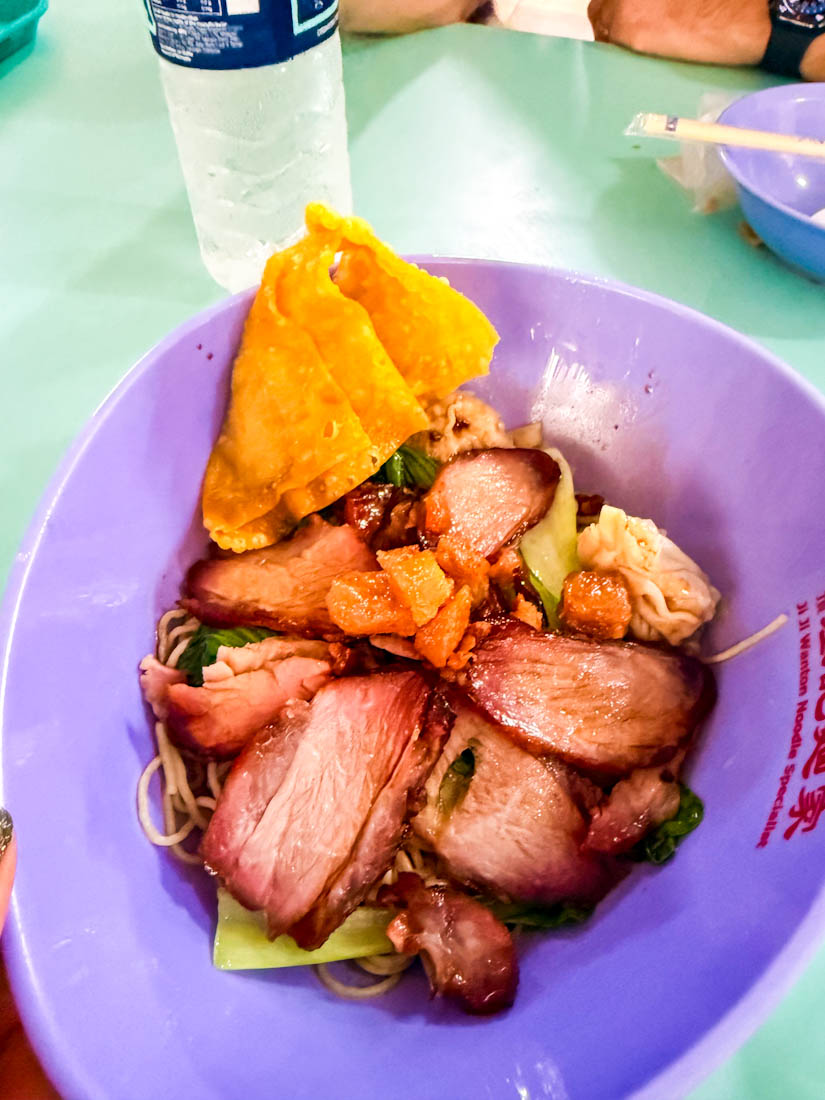
Next up, we had the noodles from the Ji Ji Noodle House. It also has a Michelin Guide Bib Gourmand status, and honestly, it lived up to the hype.
We had the signature wanton noodles (dry style ). The plate arrived generously loaded, not just the usual char siew and soup wontons, but also braised mushrooms, deep-fried wontons and greens. The pork crackling scattered over the top added the best crunch, giving the noodles real texture. The char siew was nicely caramelised with a slight smokiness, and when mixed through with their soup, everything came together perfectly. Definitely don’t skip the chilli, it makes the dish.
If you’re feeling adventurous, there’s plenty more on the menu too: dumpling noodles, braised chicken feet noodles, curry chicken noodles, and shredded chicken with Ipoh hor fun. It’s one of those stalls where you could keep coming back and never get bored.
Address: Hong Lim Market & Food Centre, Upper Cross Street, Singapore 051531 (Near Chinatown MRT)
Opening Hours: 7 am – 4 pm (Mon – Sat), 8 am – 3:30 pm (Sun)
Maxwell Food Centre Tian Tian Hainanese Chicken rice
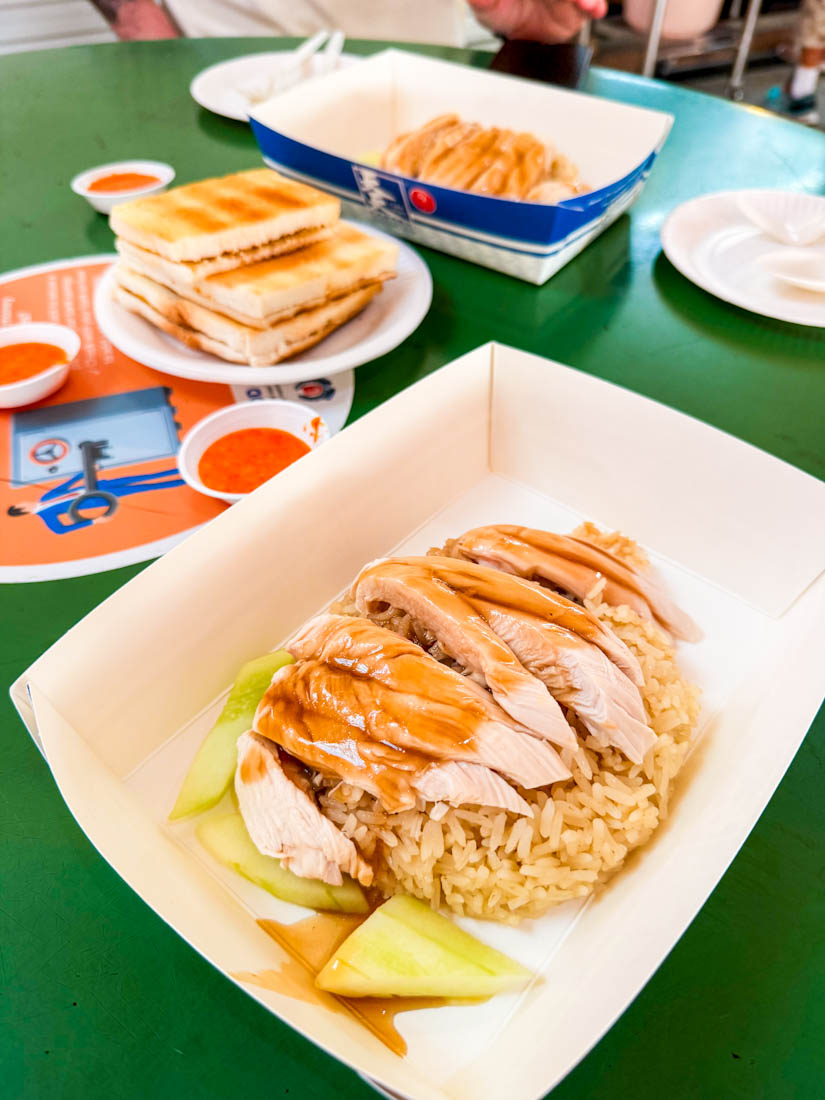
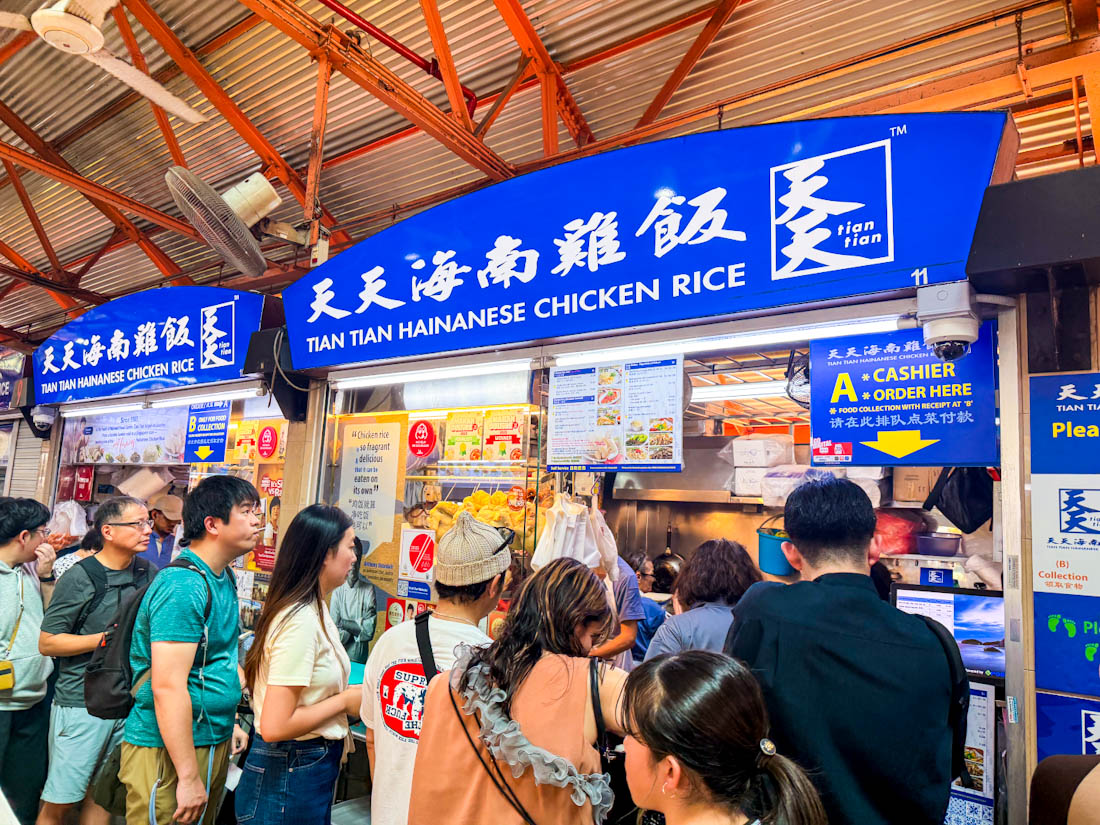
If you’re heading to Tian Tian Hainanese Chicken Rice, prepare to queue! the line is no joke. We arrived around 11.30, the queue was huge; however, as we had a tour, we had no wait.
The chicken is incredibly juicy, full of flavour, with that silky, springy skin that just melts in your mouth. It’s tender without being bland, you can really taste the quality. The fragrant oil rice is just as impressive, light yet aromatic, and the ginger-chilli sauce has that perfect salty-sweet kick that pulls everything together.
We shared one portion as we had been eating for a while, but it was amazing, the best meal so far on our food tour.
Of course, the stall’s reputation adds to the hype. Anthony Bourdain famously featured it on No Reservations and called it the best chicken rice in the world. It even beat Gordon Ramsay in a 2013 hawker challenge, which only made the queues longer.
There are lots of choices in the Maxwell Hawker centre, they even have Baguette Houng Viet for your Banh Mi, Pho, Vermicelli Noodles, and Spring Rolls Vietnamese cuisine.
Chinatown Complex Hawker CHAN
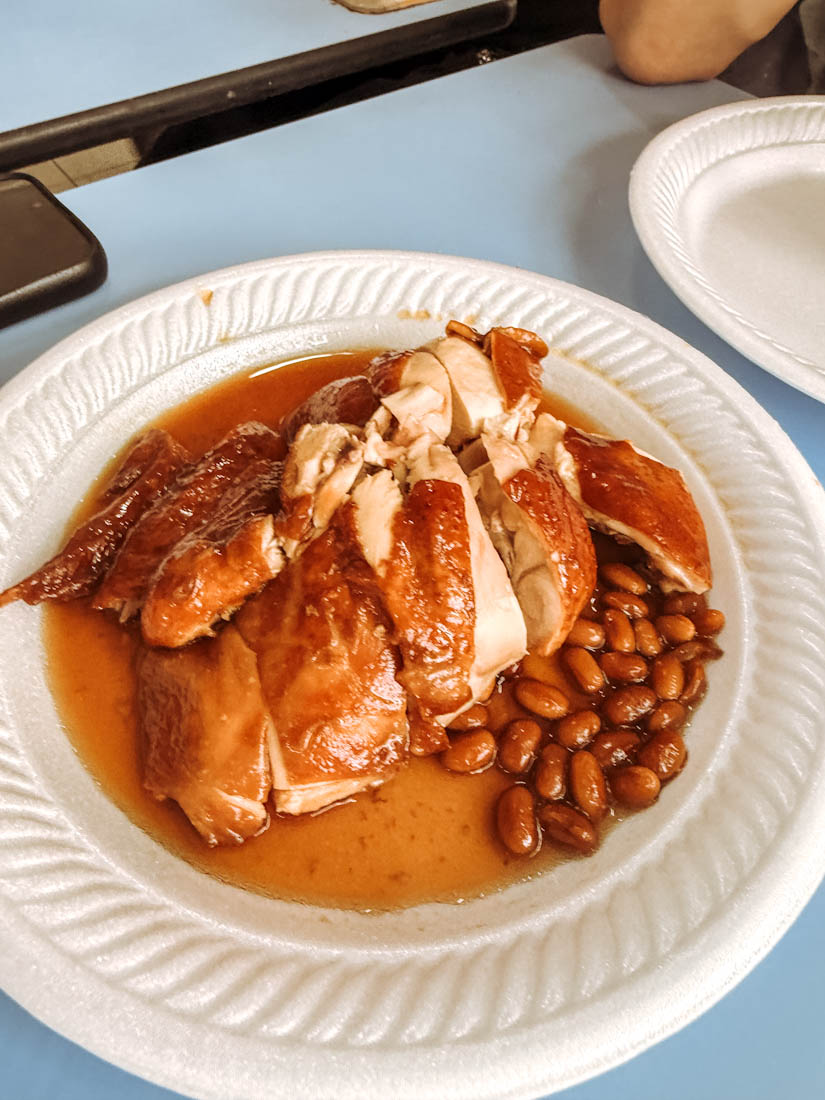
Our next stop was the Chinatown complex, even though our bellies were getting full, there was more! We had to try the food from Chan Hon Meng, the humble hawker-turned award-winning chef with over 30 years of experience, and I can see why there’s so much hype.
Liao Fan Hong Kong Soya Sauce Chicken Rice and Noodle earned worldwide attention as the first Michelin-starred street food stall. The original location at Chinatown Complex (Stall 02-126) serves soya sauce chicken over rice for around 3 SGD. The chicken gets marinated in a secret blend of sauces, then slow-cooked until the meat turns impossibly tender with a mahogany glaze.
We had the famous soya sauce chicken with beans, and it was honestly incredible. The chicken was unbelievably tender, soaked in that rich, savoury sauce that’s sweet, salty and packed with flavour. You can have it with rice or noodles, we had it without, as we were already full! Simple food, done exceptionally well.
The queue was wrapped around the block when we arrived, which says it all. But once you taste that melt-in-the-mouth chicken, you understand why people are willing to wait.
I’m already planning my next visit! It really was that good.
Navigating the Chinatown Food Centres
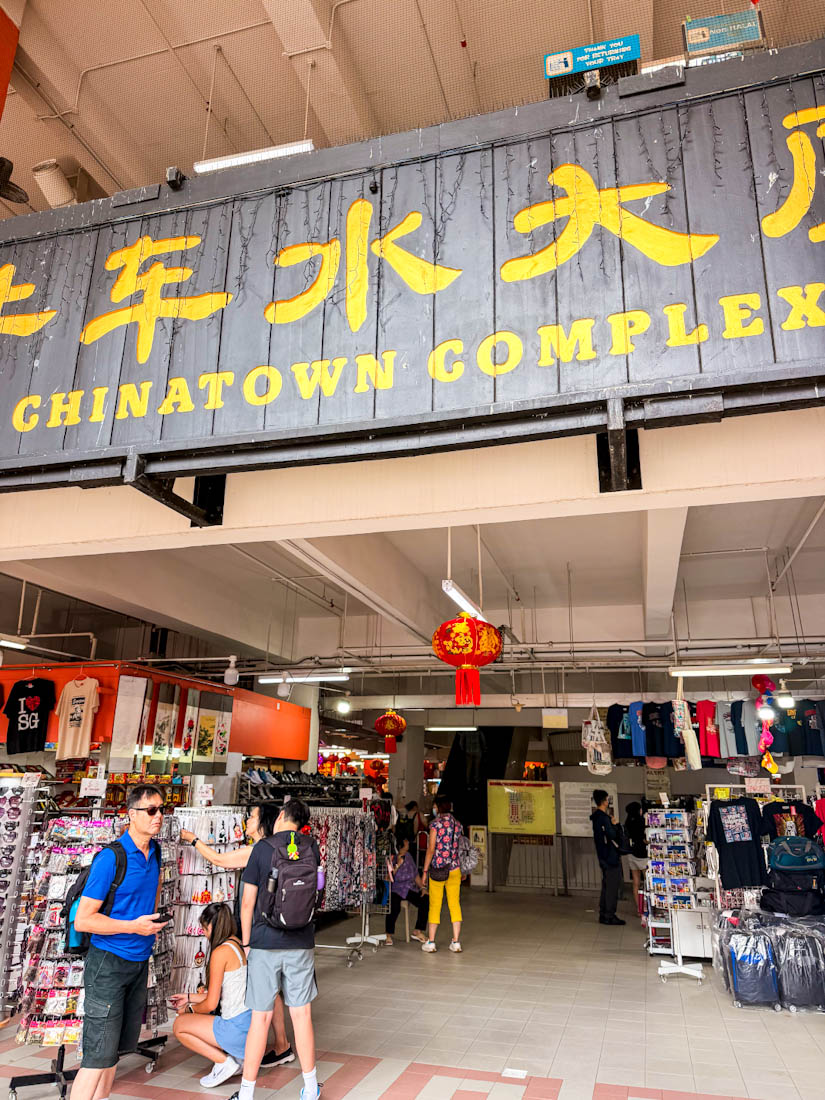
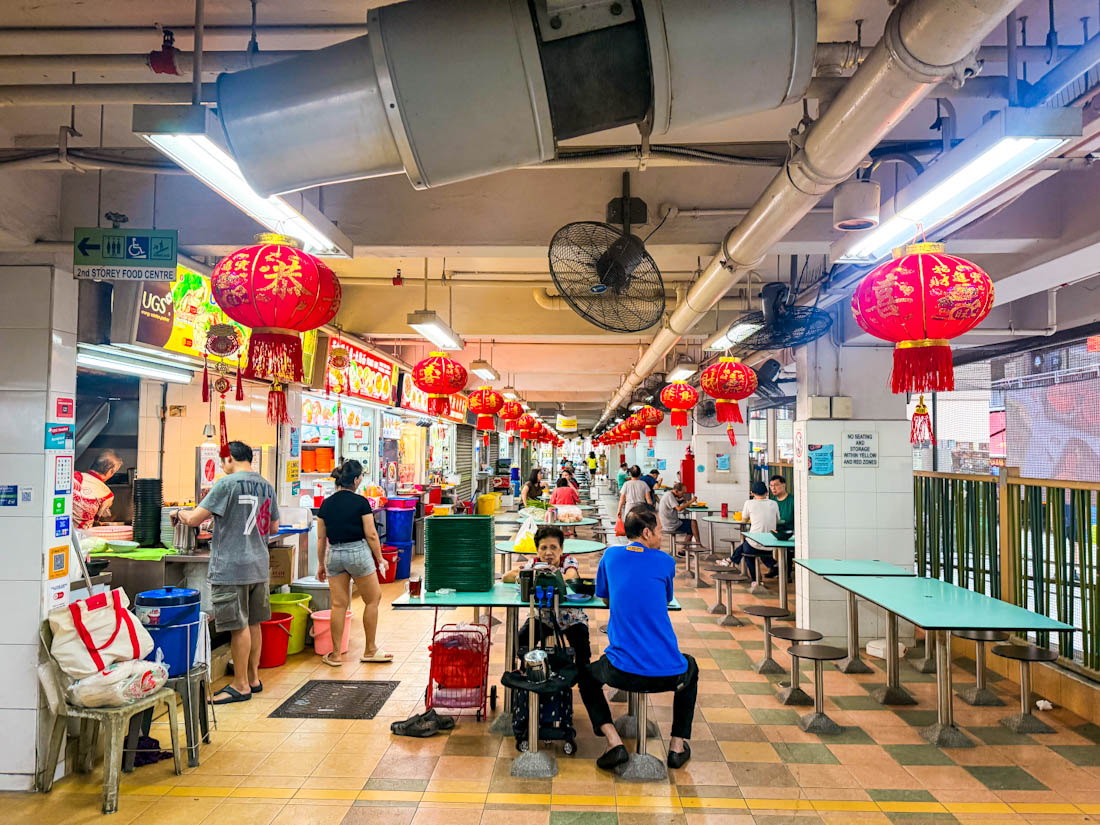
The complexes operate over multiple levels, with the second floor holding most food stalls. Finding specific vendors requires knowing the stall numbers, since English signage varies widely. The layout follows a grid pattern with numbered stalls, but first-time visitors still get disoriented because similar-looking stalls cluster together.
Seating works on a free-for-all system. Grab any empty table, then order from multiple stalls. Tissue packets or umbrellas left on tables signal reserved seats, a local practice you should respect. The center gets packed between noon and 1:30 PM on weekdays, with slightly longer windows on weekends.
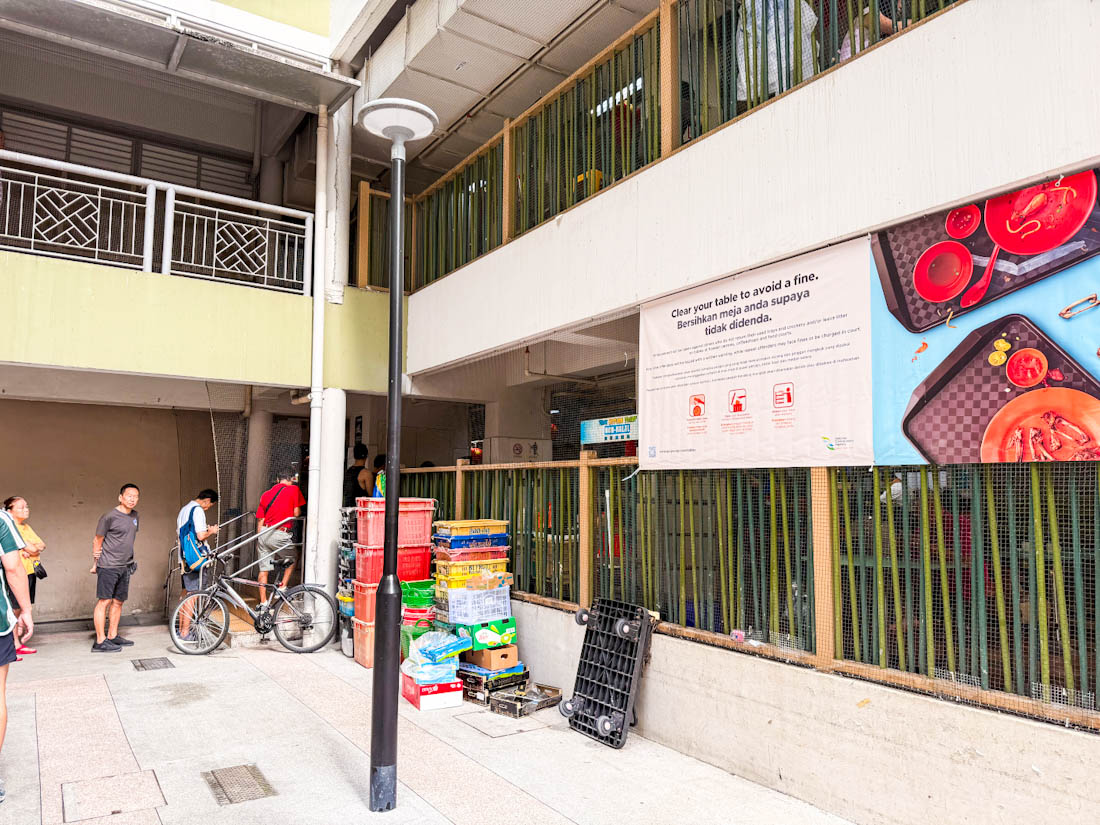
You must clear your table after! Singapore have strict rules on littering, so remove your plates and cups and return them to the many bin sections throughout.
More Michelin-starred Hawker Stalls you can not miss!
Outram Park Fried Kway Teow Mee holds its Michelin recognition through consistent execution of this Hokkien staple. Flat rice noodles get wok-fried over intense heat with prawns, Chinese sausage, eggs, and bean sprouts. The smokiness from proper wok technique makes the difference between good and legendary fried kway teow.
The Michelin-awarded stalls get attention, but several non-recognized vendors command equal respect among residents. These stalls built reputations over decades without international publicity, often because their food does not translate well to Western palates or because owners refuse to deal with increased scrutiny.
Chinatown Complex houses a roast meat stall (Stall 02-17) that produces char siu with better caramelization than most Cantonese restaurants. Another vendor specializes in Teochew porridge with an array of side dishes that create a choose-your-own-adventure meal. The curry rice stall near the back consistently sells out by 1 PM because the curry carries depth from hours of simmering.
Here is what separates these hidden champions from average stalls:
Ingredient Quality: They source specific cuts of meat or particular vegetable varieties rather than accepting whatever suppliers offer. The char siu stall uses pork shoulder with exact fat ratios.
Technique Obsession: Wok heat, cooking times, and sauce ratios get treated like scientific formulas. The fried kway teow vendor rejects orders if the wok temperature drops too low.
Single-Dish Focus: These stalls serve three items maximum, perfecting each one rather than offering extensive menus that dilute quality.
Multi-Generational Recipes: Many trace their recipes to specific Chinese provinces, with techniques passed down verbally rather than written. The curry rice follows a Hainanese style distinct from Indian or Malay versions.
Hawker Centres what you need to know
Most stalls open between 10 and 11 AM, with a few breakfast-focused vendors starting at 7 AM. The worst crowding hits from 12:30 to 1:30 PM when office workers flood the center. A second wave occurs around 6 to 7 PM. Visiting at 11 AM captures fresh cooking without overwhelming crowds. The 2:30 to 4 PM window works for stalls that stay open all day, though some vendors close during this gap.
Weekend patterns shift slightly with tourists arriving earlier but spreading visits across longer timeframes. Saturday mornings from 10 to 11 AM offer the best weekend timing. Sunday evenings see lighter traffic as visitors leave Chinatown after day trips.
Actual street food vendors have mostly disappeared from Singapore’s Chinatown due to regulations. What remains operates from fixed locations with proper licenses. The few remaining street vendors sell snacks like roasted chestnuts, ice cream sandwiches, or sugarcane juice rather than full meals.
Hawker centers replaced street food for good reasons. They provide running water, proper waste disposal, and regular inspections that street carts cannot match. The trade-off means less spontaneous food discovery but dramatically better hygiene standards and consistent quality.
Ordering your Hawker street Food
Some restaurants around Chinatown operate with a hawker-style ordering system where you select dishes from counters then sit in communal areas. These blur the line between street food and traditional dining. They typically cost 50% more than hawker stalls but offer air conditioning and more complex dishes requiring full kitchen equipment.
Most hawker stalls accept only cash, though this is slowly changing as the government pushes digital payments. Bring Singapore dollars in small denominations, as vendors struggle to break large bills. A few high-profile stalls like Liao Fan now accept cards and mobile payments, but do not count on it.
Ordering works by approaching the stall, stating your dish, and paying immediately. The vendor either delivers to your table or calls your order number. Utensils sit in canisters on tables, along with napkins and sometimes chili sauce or other condiments. You bus your own table by returning trays to collection stations.
Insider Tricks for Better Experiences
Arrive slightly hungry rather than starving so you can pace yourself across multiple stalls. Order small portions when available to maximize variety. Drink vendors operate separately from food stalls, with sugar cane juice, soy milk, and various teas offering better value than bottled drinks. Bring hand wipes since some dishes get messy and handwashing facilities stay crowded. Learn a few basic food terms in Mandarin or Hokkien to communicate preferences, though pointing at dishes other customers ordered works universally.